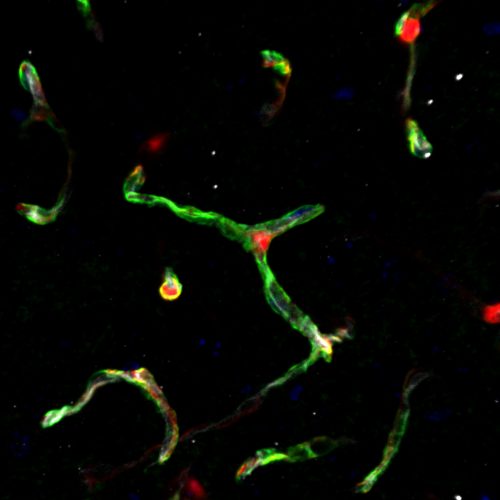
Decoding intercellular communication at the BBB interface
The blood-brain barrier (BBB) is a highly specialized vascular interface that safeguards the brain by regulating the exchange between the circulation and neural tissue, while its dysfunction is increasingly recognized as a critical driver of neurological disease. At the BBB, endothelial cells, pericytes, and astrocytes work together as a functional unit to maintain vascular and neural homeostasis. We investigate how these cells communicate with one another and how their interactions are dynamically remodeled under physiological and pathological conditions. Integrating single-cell, spatial, and functional approaches, our work seeks to uncover the molecular signals and mechanisms that govern communication at the BBB interface, particularly during injury, aging, and neurodegenerative diseases.
(Gray: endothelial cells; Red: pericytes; Green: astrocyte endfeet.)
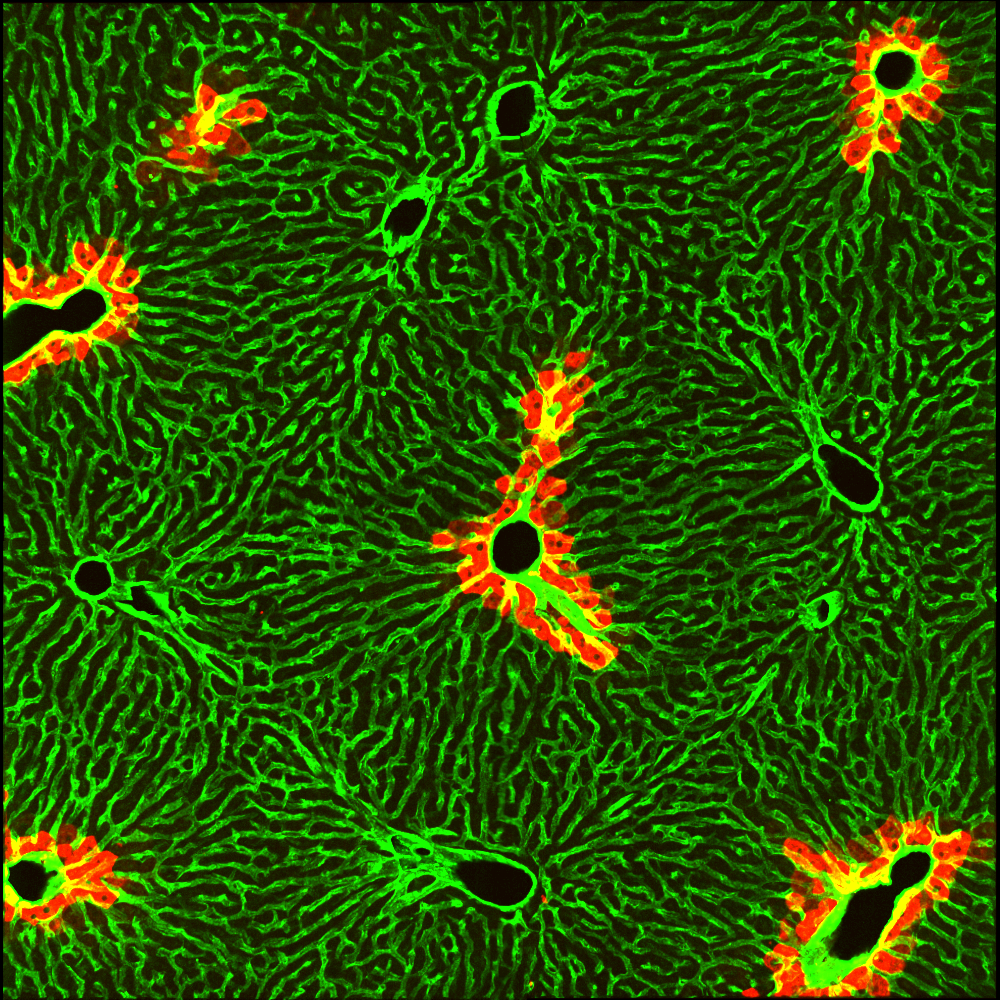
Deciphering vascular signaling in controlling organ homeostasis
Blood vessels do more than deliver oxygen; endothelial cells and pericytes actively instruct the surrounding tissues by regulating the behavior and function of neighboring cells. We aim to define how vascular signaling regulates organ homeostasis across different tissues and how these signaling networks are altered during disease. By uncovering how dysregulated vascular signaling contribute to pathological processes, including fibrosis, vascular leakage, and inflammation, we seek to develop vascular-targeted strategies to restore vascular and organ homeostasis.
Publication: Yang et. al., Hepatology, 2021 | He et. al., Journal of Experimental Medicine, 2023 | Zhu et. al., The EMBO Journal, 2024
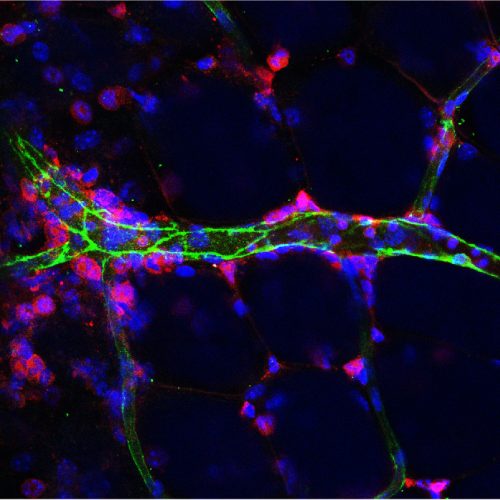
Discovering novel regulators beyond canonical pathways
Successful angiogenesis, lumen formation, and vessel maturation depend not only on canonical environmental cues such as VEGF, but also on intrinsic programs within endothelial cells. We seek to identify novel endogenous regulators that orchestrate endothelial behavior and fine-tune vascular remodeling in response to extracellular cues, promoting the formation of mature, stable, and functional vessels. Defining these mechanisms will reveal new opportunities to harness intrinsic vascular programs for enhancing reparative angiogenesis.
Publication: Dai et. el., Cell Death and Disease, 2020; Zhang et. el., Arteriosclerosis, Thrombosis, and Vascular Biology, 2022