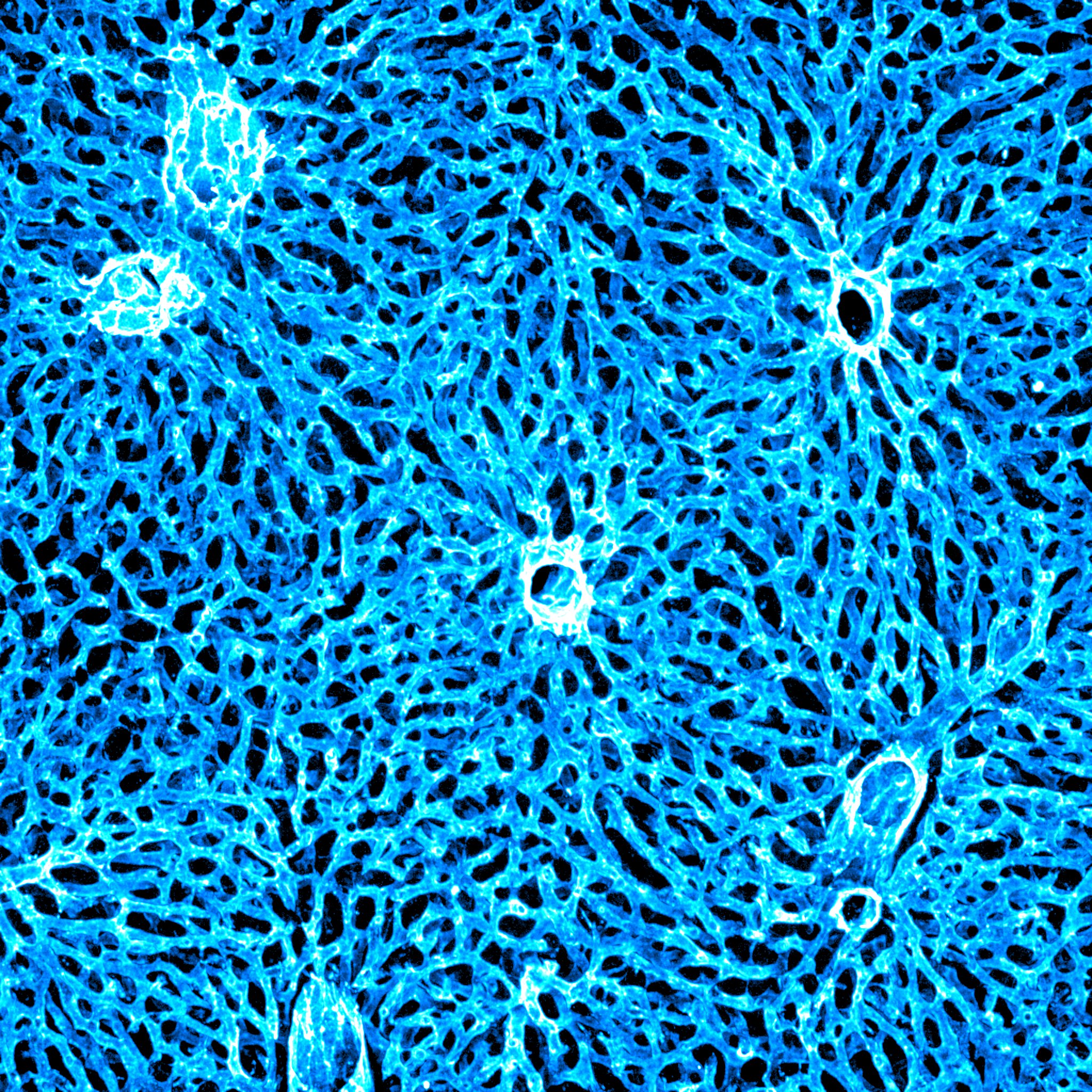
Blood vessels are far more than passive conduits for oxygen and nutrients. They are dynamic, highly specialized cellular ecosystems composed of endothelial cells and mural cells, including vascular smooth muscle cells surrounding large vessels and pericytes intimately associated with capillaries. Increasing evidence has revealed that these vascular cells actively communicate with one another and with surrounding tissues to orchestrate organ development, tissue homeostasis, regeneration, and contribute to disease progression.
Our laboratory focuses on two fundamental questions: What molecular mechanisms govern endothelial cell-pericyte communication? And how this crosstalk shape vascular and organ function? By systematically mapping endothelial-pericyte interactions across different vascular beds and organs –with a particular focus on the brain and the liver– and defining how these interactions are established, maintained, and dynamically rewired across development, health, and disease, we aim to uncover fundamental principles of vascular communication and understand how their disruption contributes to pathology. Our ultimate goal is to translate these insights into new strategies for restoring vascular function and treating disease.